

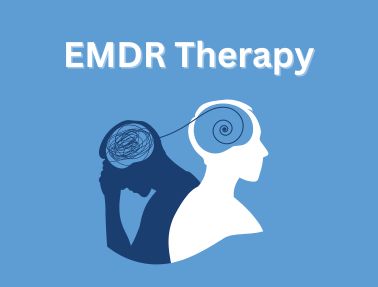
Therapy spotlight: What is EMDR therapy?
When we experience an event (or series of events) that are disturbing, the human brain can preserve the psychological, emotional, and physical distress of the event itself. In these circumstances, memories can become ‘stuck’, unable to move through their natural processing pathways. When disturbing memories remain unprocessed, individuals may experience ongoing distress that intrudes into daily life. This can include vivid flashbacks, nightmares, heightened anxiety, hypervigilance, strong emotional reactions, physical arousal, low mood, and a persistent sense of threat and negative beliefs about themselves.
Eye Movement Desensitisation and Reprocessing therapy, commonly referred to as EMDR therapy, is a highly effective, evidence-based psychological treatment that supports individuals who are struggling with the echoes of disturbing experiences. At a high level, EMDR therapy works to help memories become ‘unstuck’, reducing both the emotional intensity and the physiological activation associated with them, while helping clients to develop new and positive beliefs about themselves, others, and the world.
A note on trauma: Within the framework of EMDR, trauma is understood as a person’s subjective experience of an event or events in which they perceived they did not have sufficient internal or external resources to cope or respond at the time. This acknowledges that trauma is not determined by the event itself, but by how it was experienced and processed by the client.
What happens in EMDR therapy?
EMDR is a structured therapy protocol with distinct phases that support clients through their processing journey. The number of EMDR sessions can vary from client to client, depending upon their therapy goals and personal history. The EMDR therapist will work individually with each client to explore their goals and needs accordingly, and ensure that EMDR is appropriate.
When working with a EMDR therapist, the first step of therapy is to undergo a thorough assessment of the current difficulties a person is experiencing, as well as a detailed history of the client’s life with a focus on developing a list of disturbing memories that will be the focus of processing in EMDR therapy.
Before any memory processing occurs though, time is taken to equip clients with a set of skills to assist with emotional regulation and grounding. This is imperative to ensure that clients have a range of skills to draw from while going through EDMR therapy, as processing memories can be emotionally distressing for many clients.
When ready for the processing stage of EMDR, the therapist will assist the client to bring to mind a target memory for processing, alongside the ‘negative’ belief a person holds about themselves when thinking of that memory e.g. “I’m powerless”. The therapist will then guide the client through a series of eye movements (or other methods) while holding the target memory in mind. It might sound a bit like this: “I want you to hold that memory in your mind with the belief “I’m powerless”, and follow my fingers…”
Through undergoing a series of eye movements, the brain begins to ‘untangle’ the memory and its associated distressing thoughts, emotions, and sensations, reducing the vividness of the target memory. Once distress surrounding the target memory has reduced, the therapist will guide the client to integrate a new and positive belief surrounding the memory e.g. “I am strong” or “I survived”. A target memory is considered ‘adaptively processed’ when the client indicates significant reduction in distress throughout processing, often reporting the memory as ‘blurry’ or ‘distanced’.
Why would my therapist recommend EMDR therapy?
EMDR therapy is a highly adaptive therapeutic modality that can be utilised to support clients struggling with a range of concerns, often in conjunction with other therapies. A therapist may recommend EMDR therapy to address ‘stuck’ memories that impinge upon a client’s current life.
EMDR therapy been shown to be highly effective in rapidly reducing the unpleasant emotions and sensations surrounding stuck memories of disturbing events and is a leading evidence-based treatment for post-traumatic stress disorder or PTSD. There is also a growing body of research indicating the effectiveness of EMDR for a range of psychological conditions including depression, anxiety, chronic pain, and phobias.
At Integral Psychology, we have clinicians trained to deliver EMDR therapy. If you are considering EMDR, or would like further information, reach out to us for further information.
Mitch Doyle
Psychologist
Related Posts
TIPP Skills: Rapid Relief for Intense Emotions
When emotions escalate quickly—whether it’s anxiety, anger, or distress—it...

Vicarious Trauma: The Hidden Toll of Disaster Recovery
Natural disasters like Ex-Tropical Cyclone Alfred, which recently impacted...